 Highlights
After careful consideration, we decided to reopen the “Cyberspace 4 Philosophers’’ Limited Edition NFTs activity in order to allow even more of our community members to participate in Ontology’s 4th anniversary celebration. This time, the quota was released in four rounds to meet the needs of community members all around the world. Within 7 days, all 10,000 NFTs were fully sold out, demonstrating the extraordinary enthusiasm of Ontology community members. Congratulations to everyone who managed to mint their NFTs. The staking is about to begin, so please stay tuned!
Latest Developments
Development Progress
- We have completed the launch of Ontology’s EVM TestNet. At the same time, the “Security Vulnerabilities and Threat Intelligence Bounty Program’’ launched by Ontology and SlowMist is in progress.
- We are 100% done with the survey on the improvement of the decimals of ONT and ONG and we are 65% done with testing.
- We are 65% done with the survey on the RISCV’s simplified instruction set architecture.
- We are 40% done with the survey on the truebit challenge design.
- We are 15% done with the design of the Rollup VM.
Product Development
- ONTO Web hosted a campaign with IoTeX. The first 500 participants will earn rewards. The event is in progress, and will end at 17:00 (Singapore time) on December 26th.
- ONTO hosted a NFT Giveaway campaign with OpenBiSea. Participants who complete tasks such as downloading the ONTO App had the opportunity to earn special NFTs. The event has successfully concluded, with more than 400 participants.
- ONTO hosted a campaign with AcryptoS. Participants who complete related tasks had the opportunity to earn rewards. The event has successfully concluded, with more than 300 participants.
- ONTO hosted a NFT Giveaway campaign with HashLand. Participants who complete tasks such as downloading the ONTO App had the opportunity to earn special NFTs. The event has successfully concluded, with more than 400 participants.
On-Chain Activity
- 122 total dApps on MainNet as of December 20th, 2021.
- 6,838,307 total dApp-related transactions on MainNet, an increase of 3,014 from last week.
- 16,853,206 total transactions on MainNet, an increase of 25,525 from last week.
Community Growth
- We held our weekly Discord Community Call, led by Ontology Harbinger Polaris. He focused on “what is trust?”. Since there is no authority to guarantee trust in Web3, we need to re-define it. We believe that a “Trustless” decentralized network should be able to protect the privacy of users through DID, and achieve anonymous and secure interactions by integrating the reputation system on the chain.
- We held our DeID Summit, led by Humpty Calderon, our Head of Community. He invited bloXmove CEO Sophia Roediger and CTO Harry Behrens to discuss the application of DID technology in the field of mobile travel. The fragmentation of the urban transport industry means there is a great need to fortify user security and data through decentralized technologies. By integrating Ontology’s DID and data solutions, the whole ecosystem of bloXmove will be made more private, more secure, and will be easier to navigate.
- We held our Telegram weekly Community Call, led by Benny, an Ontology Harbinger from our Asian community. He discussed with community members about Ontology’s 4th anniversary NFT event, the development of the Internet, the development goals of Web3, and the role of Ontology in the construction of Web3. Community members expressed their opinions enthusiastically.
- As always, we’re active on Twitter and Telegram, where you can keep up with our latest developments and community updates.
Ontology in the Media
Forbes — 《How Decentralized Identity Is Reshaping Privacy For Digital Identities》
“More and more, our lives require verification of our identities: buying a car, applying for a mortgage or signing up for a new service. Yet, the current systems for authenticating users and establishing trust online are inconvenient for users and onerous for business. More importantly, the current approach forces users to surrender their privacy, while the security and trust of online transactions barely clear the bar of “good enough.”
In the face of the advent of decentralized networks, redefining trust and reshaping the network system is a top priority. The decentralized identity solution launched by Ontology is a key part of this: Users can use DID for one-click login. Secret key authorization meets the needs of privacy protection, and simplifies the process of login authentication and authorization. The reputation system protects user information while giving users trust in anonymity.
]]>The once fictional concept of the “Metaverse” is fast becoming a reality — and Ontology is set to be an integral part of this evolving ecosystem. Ontology’s ONT ID is equipped for the Metaverse of the future, allowing users to easily traverse different environments within the Metaverse, in addition to enabling migration in and out of the virtual world. Whether online or offline, trust is an integral feature of a functioning society. OScore, the credit review system, bolsters trust and reliability when transacting, benefitting both individuals and organizations alike. Ontology is committed to accelerating the arrival of the coming Metaverse via research and development of the blockchain, and further upgrades to its decentralized identity and data solutions.
Latest Developments
Development Progress
- We have completed the launch of Ontology’s EVM TestNet. At the same time, the “Security Vulnerabilities and Threat Intelligence Bounty Program’’ launched by Ontology and SlowMist is in progress.
- We are 100% done with the survey on the improvement of the decimals of ONT and ONG and we are 55% done with testing.
- The ontology-go-sdk and ontology-java-sdk support ONT and ONG decimals updates, and SDK development has been completed.
- We are 56% done with the survey on the RISCV’s simplified instruction set architecture.
- We are 30% done with the survey on the truebit challenge design.
- We are 10% done with the design of the Rollup VM.
Product Development
- ONTO App v4.1.3 was released, bringing support for FIO chain and the domains feature, as well as updating paths for the sharing feature.
- ONTO hosted a campaign with Mars Ecosystem. The first 200 participants, and the top 20 participants who stake the most, will receive rewards. The event is in progress, and will end at 17:00 (Singapore time) on December 17th.
- ONTO hosted a social campaign with 4 BSC MVB projects: BabySwap, Mars Ecosystem, Binamon and Wanaka. Participants can evenly share the rewards after completing tasks such as downloading the ONTO App. The event is in progress, and the number of participants has exceeded 4,000 at present.
- ONTO hosted a social campaign with PokeMine, participants who complete tasks such as downloading the ONTO App have the opportunity to earn rewards. The event has successfully concluded, with more than 400 participants.
- ONTO hosted a social campaign with WidiLand. Participants who complete tasks such as downloading the ONTO App have the opportunity to earn rewards. The event is in progress, with more than 300 participants.
On-Chain Activity
- 122 total dApps on MainNet as of December 13th, 2021.
- 6,835,293 total dApp-related transactions on MainNet, an increase of 3,167 from last week.
- 16,827,681 total transactions on MainNet, an increase of 28,001 from last week.
Community Growth
- 302 new members joined our global community this week. Over the past four years, the global community has been Ontology’s most solid support. We also welcome more new members to join us to witness and promote the third historical revolution of the Internet together with Ontology.
- We held our weekly Discord Community Call, led by Ontology Harbinger Polaris. He focused on whether price really reflects the development of a project; Polaris and Ontology Harbinger Atherton Hoge discussed this issue with community members, and Ontology has been insisting on the correct positioning and development direction.
- We held our Telegram weekly Community Call, led by Benny, an Ontology Harbinger from our Asian community. He discussed with community members about Ontology’s 4th anniversary NFT event and the current Metaverse construction. Community members expressed their opinions enthusiastically.
- We held our Telegram weekly Community Call of our Spanish community for the first time, led by Ontology Harbinger Emilio, he reviewed the latest progress made in the fourth anniversary of Ontology with community members: Through the comprehensive deployment of DID, global users can maintain the unity of identity and the interoperability of data.
- As always, we’re active on Twitter and Telegram where you can keep up with our latest developments and community updates.
Global News
- Ontology founder Li Jun was interviewed by Cybernews, he said users are increasingly sharing their sensitive personal information in exchange for convenience services in the article: “Decentralized identity: is privacy worth the risk?”. He believes that decentralized identity can preserve privacy of users when leading increasingly interconnected lives.
Ontology in the Media
AMB Crypto — 《Metaverse shows potential to become a trillion dollar industry, transform Web3.0》
“The Web 2.0 mobile internet changed how, where, when, and why we used the internet. In turn, this changed the products, services, and companies we used, which changed our business models, culture, and politics — the Web 3.0 Metaverse has the potential to do the same.”
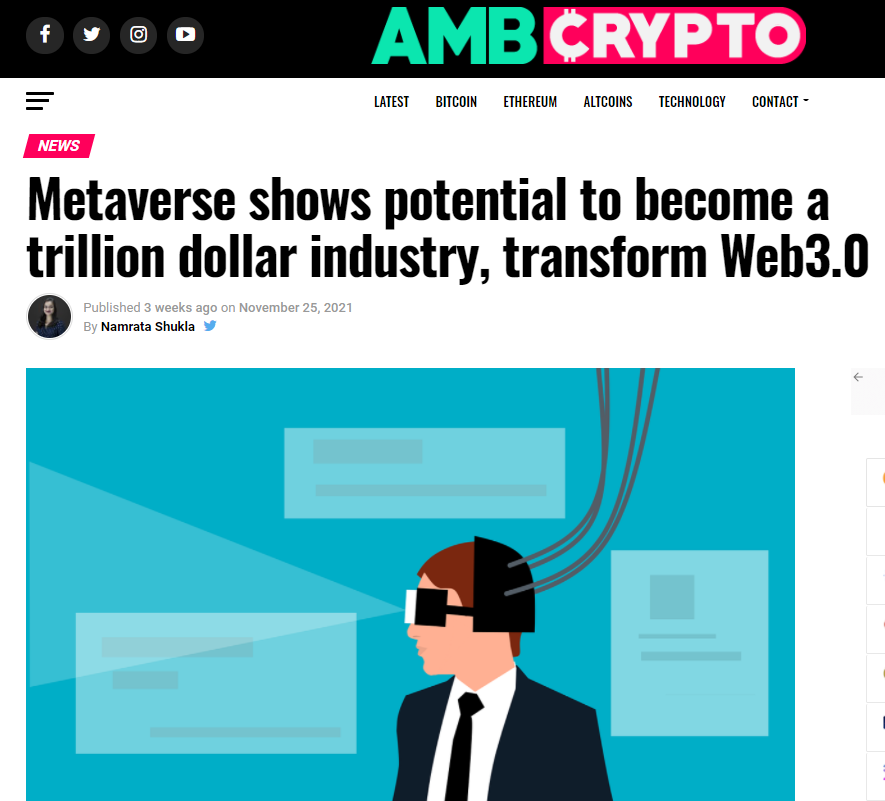
In order to better promote the Web3 ecological construction and build a better decentralized and interoperable infrastructure for the arrival of the Metaverse, Ontology is carefully polishing the decentralized identity and data technology to put user identity privacy and data security at the core. At the same time, building a decentralized network with decentralized identity by constructing global partnerships.
]]>As the industry has progressed and the world has increasingly embraced decentralized solutions, privacy and security issues associated with Web2 and Big Tech have been exposed. Looking to facilitate a more secure and private internet in Web3, Ontology has been working hard to build out its public chain infrastructure, decentralized identity, and data solutions to support the transition to the new web.
As well as a more private and secure internet, Web3 offers the potential for fascinating use cases as the web becomes more integrated. The metaverse, an all-encompassing digital landscape populated by virtual people, places and things, will eventually see separate virtual worlds interlink and overlap the real world. To get there, we need a public chain that puts users’ security and privacy front and center, whilst also allowing for an interoperable virtual world. Over the last four years, Ontology has been working to create an infrastructure for just that and we are delighted to now be facilitating this vision of a better internet.
As we look to the future, we are excited to onboard new partnerships and make technological advancements that contribute to our vision of Web3, as well as to the growth of our global community.
Year 1: Laying The Foundations
The launch of Ontology’s MainNet 1.0 served to position us as a high-performance public blockchain. In a significant move for the wider industry, Ontology 1.0 was the first public chain capable of executing smart contracts with identity, setting the stage for our vision for decentralized identity solutions. To lay the foundations for the open governance model which has become a key aspect of Ontology, we introduced a new consensus algorithm, VBFT, for the Ontology framework and the Triones Consensus System.
Year 2: Building Out Our Infrastructure
Year 2 saw Ontology crystallize our vision and mark out our position within the broader blockchain ecosystem. Gaining traction, we were able to supplement our MainNet by building on it with further enterprise projects that were focused on decentralized identity and data privacy. Broadening the technical applications of our chain, we launched Wasm TestNet in May, as well as the first-ever cross-chain TestNet. We didn’t stop there; in fact, it was a Multi-VM launch that year, with the launch of our Sharding Design launching in October, which provided linear stability and support for cross-shard transaction processing.
Year 3: Global Expansion
Having made our mark on the industry through technical prowess, the Ontology mission for our third year was to become a cross-chain, global network that would expand our vision of decentralized identity and data through a host of fascinating partnerships.
Throughout the year, we improved our infrastructure through the roll-out of the Ontology Layer 2.0. Additionally, ONT ID was upgraded, which served to combine users’ decentralized identity with their ONTO Wallet with one single login, while providing a framework that helps users control their identity and data. This was a huge step towards interoperability and provided an interlinked suite of products to our users.
We introduced a new governance and staking model in July, affecting both our ONT and ONG tokens, complete with a node and yield calculator allowing users to easily estimate how much they could potentially earn from staking via ONTO. Excitingly, ONG also launched on Uniswap at the end of the summer, bringing Ontology’s token to a whole new user base. As the year developed, we deployed our cross-chain decentralized identity solution on Ethereum, Near, Neo, TRON, Klaytn, Binance Smart Chain, and Polkadot. We also partnered with Patract Labs in November to accelerate smart contract ecosystem development. Finally, we joined forces with Daimler Mobility AG’s Blockchain Factory to develop MoveX, a first-of-its-kind blockchain-based mobility platform for the automotive and mobility industry.
Towards the end of the year, our focus turned to the world of decentralized finance (DeFi). In September 2020, we launched Wing.Finance, a credit-based, cross-chain DeFi lending platform. Since then Wing has seen significant growth, with increased engagement in its DAO, and has also incorporated credit-based lending through Ontology’s unique OScore credit scoring solution. The Wing Inclusive Pool, a first mover in the industry, also allows users to under-collateralize assets and lower their interest rates.
Year 4: Web3 and Interoperability
This year, Ontology has honed our existing products to match our wider vision of Web3 and position ourselves as the public chain capable of moving towards a better, decentralized, interoperable internet that places user privacy and data security at the heart of its priorities.
To facilitate this vision, our technical team began developing the Ontology Ethereum Virtual Machine (EVM) at the start of 2021. Now on TestNet, our EVM will help us establish seamless interoperability between Ontology and the Ethereum platform, offering an inclusive experience to developers and users. This development will also help to cement Ontology’s position as a cross-chain interoperable blockchain, adding to its existing virtual machines; NeoVM, Native (Ontology) VM, and WasmVM.
Reflecting a major endorsement for decentralized identity, ONT ID surpassed 1.5 million users in September. Companies across the globe have also embraced the application this year, most notably through a social good partnership announced in March with global freelancing marketplace leader, MicroWorkers, where it is being used to assist workers to receive rewards and gain greater access to capital. To facilitate its ever-expanding user base, ONT ID underwent an upgrade that will improve user experience, while also making it easier for developers to build sophisticated applications and real-world use cases through ONT ID. The Ontology products now integrated with ONT ID include:
- ONT Login, a new feature that makes trustless universal authentication for websites and applications possible, allowing users to log into multiple platforms without having to remember passwords.
- ONT TAG, Ontology’s new decentralized solution for online identity verification, which helps applications access users’ verifiable credentials, such as KYC verification, whilst also allowing users to protect their privacy by authorizing information independently.
- OScore, a DeFi credit score, used to measure creditworthiness, which is calculated using different types of on-chain transaction data.
Other partnerships have also contributed to Ontology’s arsenal. Most recently, we partnered with bloXmove, a business-to-business mobility blockchain platform designed to simplify travel across multiple forms of transportation, to bring decentralized identity to urban transport apps. In May, we partnered with ROCKI, a next-generation music streaming service and NFT platform. ROCKI will use Ontology’s decentralized identity solutions to prevent bad actors from impersonating artists and peddling inauthentic NFTs. In June, we also announced a partnership with ZAICO, a real-time cloud storage inventory management application based in Japan. We also partnered with AP.LLC, a private Japanese IT consultancy firm and hired a new Japanese advisor, Matsuyama Kitao Takayuki.
Ontology’s growth in the Japanese market has accelerated following a string of announcements, including the news that ONT would be listed on the Japanese registered crypto exchange, Decurret. This marked the first listing of ONT in Japan, a huge milestone for Ontology and our growing Japanese community. The ONT/JPY trading pair went live in July, with over 40,000 ONT trading volume taking place. In August, ONT was listed on Huobi Japan, another FSA-licensed Japanese exchange.
In January, we were delighted to announce the launch of a web-based ONTO wallet to bring additional accessibility to millions of users through their web browser. Incredibly, this was the first-ever web wallet to support cross-chain assets and dApps while also addressing the growing demand for decentralized identity and data amongst users. We also launched ONTO Anydrop, a decentralized airdrop distribution tool, that allows assets to be sent to up to 100 addresses in one transaction in a fast and secure manner across multiple mainstream blockchains. These significant achievements have led to a massive increase in users and community members of ONTO Wallet. The ONTO Wallet Twitter channel now has over 100K followers.
Wing, Ontology’s DeFi lending platform, also turned one this year. Over the past year, Wing has lived up to its title of a cross-chain platform through launching on Ethereum, OKExChain and most recently, Binance Smart Chain. It also launched a new DeFi product, “Any Pool,” which allows for the contractualization and lending of any asset.
Looking Ahead
As we have seen, the last four years have been full of incredible achievements. Undoubtedly, our community is the support system that drives this success at Ontology. As we step forward into the next era of our future, we are proud to be a well-established blockchain that has stood the test of time. Moving into Web3, we believe we are the chain that can facilitate the needs of the new web. Not only do we expect our protocols and products to continue to facilitate this shift, but we also look forward to welcoming more people to the decentralized identity and data revolution.
]]>In a relatively new industry like blockchain, change is a constant state. When Ontology launched at the end of 2017, Bitcoin was putting crypto on the map through continuous price surges, before crashing at the end of 2018. Since this time, in an uncharted landscape that at times seemed dominated by speculation, Ontology strove to be a lighthouse in a sea of confusion, providing clear and reliable blockchain use cases that put users’ interests first. To celebrate Ontology’s 4th anniversary, Ontology and community members jointly designed the anniversary special event “Cyberspace 4 Philosophers”.
At the same time, the new version of our official website ont.io was launched. The new architecture and multi-language version will bring users a better experience. With a continued focus on decentralized identity and data solutions, Ontology will bring better trust, privacy, and security to the new web3.
Latest Developments
Development Progress
- We have completed the launch of Ontology’s EVM TestNet and are 97% finished with testing. At the same time, the “Security Vulnerabilities and Threat Intelligence Bounty Program’’ launched by Ontology and SlowMist is in progress.
- We have finalized Ethereum RPC support and have completed internal testing. The TestNet has been synchronized online; we are 98% done with testing.
- We have completed Ontology’s Ethereum account system development and the TestNet has been synchronized online; we are 97% done with testing.
- The EVM/OEP-4 asset seamless transfer technical solution, which facilitates the efficient conversion between OEP-4 assets and EVM assets, is complete and the TestNet has been synchronized online; we are 100% done with testing.
- We are 100% done with the survey on the improvement of the decimals of ONT and ONG and we are 20% done with testing.
- The ontology-go-sdk and ontology-java-sdk support ONT and ONG decimals updates.
- We are 40% done with the survey on the RISCV’s simplified instruction set architecture.
Product Development
- ONTO App v4.1.2 was released, optimizing the NFT management function.
- ONTO hosted a campaign with BabySwap, the top 20 participants who stake the most will receive the highest tier of rewards. The event successfully concluded, with more than 300 participants.
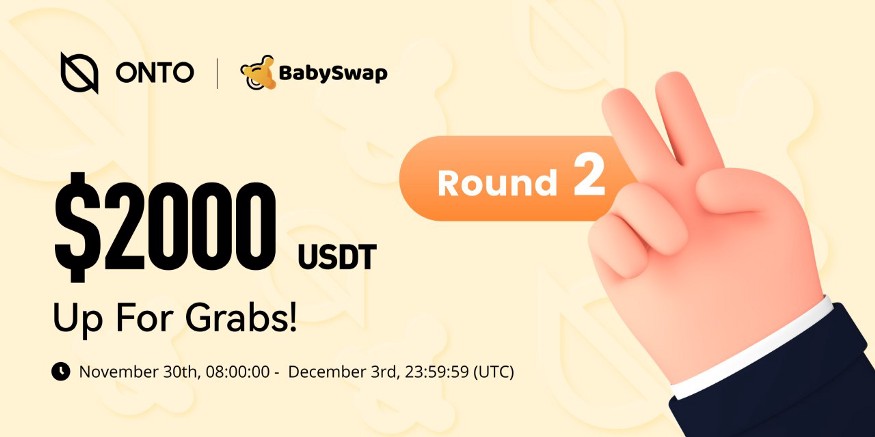
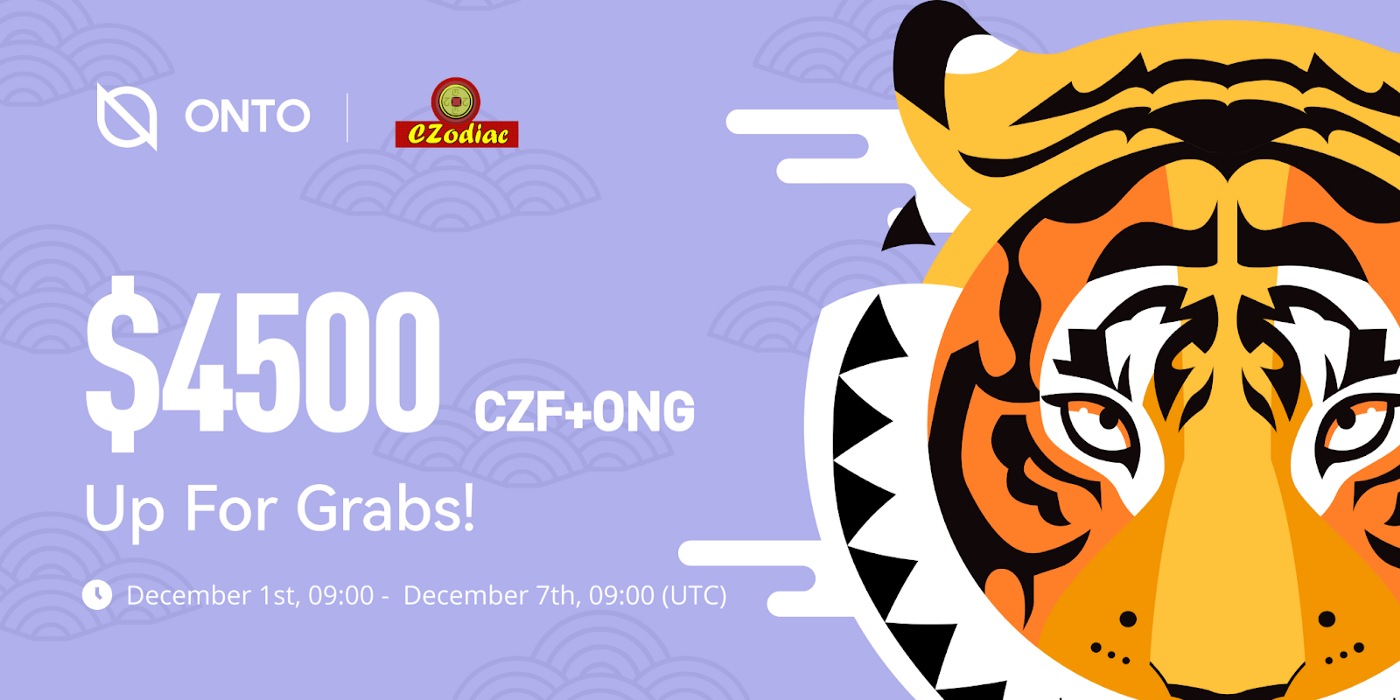
- ONTO hosted a campaign with CZodiac, the first 300 participants will receive rich rewards. Participants who meet certain conditions will have the chance to enter a lottery. The first 100 new ONTO users participating in the event also receive additional rewards. The event is in progress, and will end at 17:00 (Singapore time) on December 6th.
On-Chain Activity
- 122 total dApps on MainNet as of December 6th, 2021.
- 6,832,126 total dApp-related transactions on MainNet, an increase of 8,875 from last week.
- 16,799,680 total transactions on MainNet, an increase of 66,150 from last week.
Community Growth
- 814 new members joined our global community this week, and Polaris from the English community officially became a Ontology Harbinger. This excellent community member has always been an active supporter and will bring more new energy to our community, and also welcome more new members to join us.
- Ontology published the next couple of interviews in its Harbinger Series. Polaris from our English community said that Ontology uses blockchain technology to continuously promote the development of the smart economy on the basis of protecting user privacy, making it fairer and more transparent, so he has become a supporter of Ontology.
- We held our weekly Discord Community Call, led by Humpty Calderon, our Head of Community. He focused on how OScore promotes a fairer blockchain; There needs to be a system that allows us to quickly determine the authenticity or credibility of a person in the blockchain world. OScore is an onchain credit score for programmable creditworthiness, OScore can present one’s credit standing in DeFi and is calculated using many different pieces of on-chain transaction data.
- We held our Telegram weekly Community Call, led by Benny, an Ontology Harbinger from our Asian community. He discussed with community members about Ontology’s 4th anniversary NFT event and recent popular NFTs and games. Community members expressed their great anticipation for this extraordinary commemorative event.
- As always, we’re active on Twitter and Telegram where you can keep up with our latest developments and community updates.
Global News
- Ontology’s Chief of Global Ecosystem Partnerships, Gloria Wu, published the article “Why a decentralized metaverse is Web 3.0’s new frontier” in Forkast. She said decentralized networks built on blockchain can help to ensure no single entity has monolithic control over a given technology. Blockchain will be essential for creating a thriving metaverse and providing the decentralized infrastructure needed.
Ontology in the Media
Verdict — 《Web3: A fundamentally different kind of internet?》
“Blockchain has come a long way in recent years and, due to the massive hype surrounding it, it can be easy to forget that the nascent technology has not been around for long. Web3 has gained traction throughout 2021 due to the rise of blockchain-based technologies including cryptocurrencies, non-fungible tokens (NFTs), DeFi, and decentralised autonomous organisations (DAOs).”
In such an environment, we need to have a unique identity-decentralized identity. Based on this, we can log in to countless applications in Web3, manage our own data, and prove our credibility. In order to achieve this goal , Ontology intensively cultivates decentralized identity and data solutions, carefully polishes existing products, and puts user identity privacy and data security at the core. In September 2021, the number of users who manage their digital identity using Ontology’s Decentralized Identity Application, ONT ID, is over 1.5 Million. To date, ONT ID has been integrated into a number of leading products through partnerships with Mercedes Benz manufacturer Daimler Mobility, Microworkers, ROCKI and many more.
]]>
Developments/Corporate Updates
Development Progress
- We have completed the launch of Ontology’s EVM TestNet and are 95% done with testing. At the same time, the “Security Vulnerabilities and Threat Intelligence Bounty Program’’ launched by Ontology and SlowMist is in progress.
- We have completed Ethereum RPC support and are 100% done with internal testing. The TestNet has been synchronized online; we are 95% done with testing.
- We have completed 100% of Ontology’s new Ethereum account system and the TestNet has been synchronized online; we are 96% done with testing.
- The EVM/OEP-4 asset seamless transfer technical solution is complete and the TestNet has been synchronized online; we are 98% done with testing.
- We are 100% done with the survey on the improvement of the decimals of ONT and ONG and we are 50% done with internal testing.
- The ontology-go-sdk and ontology-java-sdk support ONT and ONG decimals updates.
- We are 30% done with the survey on the RISCV’s simplified instruction set architecture.
Product Development
- ONTO App v4.1.1 was released, adding support for the Harmony Chain, wallet switching function for dApps supporting multiple chains, and support for configuration of token unit.
- The ONTO NFT management function has been upgraded to support users to independently add NFTs on Ethereum, Ontology, Binance Smart Chain, and Polygon. Users can also link to various mainstream NFT markets.
- ONTO hosted a campaign with BabySwap. The first 100 participants, and top 20 participants who stake the most, will receive the highest tier of rewards. Voting for ONTO in BabySwap also has a chance to get extra rewards. At present, the number of participants has exceeded 1,000.
- ONTO hosted a campaign with MCDEX. The first 300 participants will receive rich rewards. The current number of participants is about 500.
- ONTO hosted a campaign with OCP Finance. The first 150 participants, and top 20 participants who stake the most, will receive the highest tier of rewards. Participants who meet certain conditions will have the chance to enter a lottery. The current number of participants is about 500.
- ONTO hosted a campaign with cBridge. The first 250 participants, and top 50 participants who stake the most, received the highest tier of rewards. Participants who meet certain conditions had the chance to enter a lottery to win ONG. The event successfully concluded, with more than 700 participants.
- ONTO hosted a campaign with ACryptoS (BSC). The first 75 participants, and top 20 participants who stake the most, received the highest tier of rewards. The first 100 new ONTO users participating in the event received additional rewards.
- ONTO hosted a campaign with Landshare. The first 200 participants, and top 10 participants who stake the most, received the most rewards. The top 100 new ONTO users who participated in the event also received additional rewards. The event successfully concluded, with more than 800 participants.
- ONTO hosted a campaign with CafeSwap (Polygon). Participants who meet certain conditions had the chance to enter a lottery to win ONG rewards.The event successfully concluded, with more than 800 participants.
- ONTO hosted a campaign with Wing and ApeSwap. The first 100 participants each won rewards and all eligible users can participate in a lottery. The event successfully concluded, with more than 1,400 participants.
- ONTO hosted a campaign with ButterSwap. The top 200 participants, and the 3 participants with the highest participation received rewards. The first 200 new ONTO users participating in the event also received additional rewards. The event successfully concluded, with more than 600 participants.
- ONTO hosted a campaign with O3 Swap. The first 300 users who use ONTO to participate received rewards. All participants who met the conditions had the opportunity to participate in the lottery. The event successfully concluded, with about 1,000 participants.
On-Chain Activity
- As of November 24, 2021, there have been 121 dApps launched in total on MainNet.
- There have been a total of 6,823,269 dApp-related transactions completed on MainNet, an increase of 30,256 dApp-related transactions compared to the past month.
- There have been a total of 16,733,530 transactions completed on MainNet, an increase of 148,854 transactions compared to the past month.
Community Growth & Bounty
- This month, Geoff Richards from the English community officially became an Ontology Harbinger. This excellent community member will bring more new energy to our community, and also welcome more new members to join us.
- Ontology published the next couple of interviews in its Harbinger Series. We invited John Francisco from our Spanish community, Munaj Hossan from our Bengali community, Andrey Sher from our Russian community, and Geoff Richards from our English community. These outstanding Harbingers are dedicated to helping local community members to further understand the various dynamics of Ontology.
- Ontology Harbinger Emilio, from our Spanish community, was invited to participate in an online interview organized by YouTube KOL, BCryptoDinero. He discussed how Ontology focuses on providing decentralized identity and data solutions for Web3, and shared Ontology’s vision, plan and future outlook.
- This month, Humpty Calderon, our Head of Community, held Ontology Community Call on Discord as always. He focused on topics such as “how to contribute to Ontology’s ecosystem”, “Let NFT return to the public”, and facilitated community members discussions and analysis about the possibility of participating in the Ontology ecosystem, the operating experience of Ontology nodes, and the importance of DID to the popularization of NFT. He also held our weekly DeID Summit, hosting a Q&A with Charles Wayn, co-founder of Project Galaxy, to discuss “NFTs as a service infrastructure”.
- We held our Telegram Staking Q&A, led by Humpty Calderon. He elaborated on the economic model of Ontology and answered staking-related questions so that interested members can participate more easily.
- We held our Telegram Community Call, led by Astro and Benny, Ontology Harbingers from our Asian community. They introduced Ontology’s Staking strategy and upcoming 4th anniversary NFT event; Community members expressed their great anticipation for this extraordinary commemorative event.
- As always, we’re active on Twitter and Telegram where you can keep up with our latest developments and community updates. To join Ontology’s Telegram group and keep up to date, click here.
New Team Members
We are delighted to welcome our newest members of the Ontology team. This month, we welcomed a new Technical Support Intern, a new Ecosystem Growth Intern, a new Marketing Manager, a new Operation Associate, a new Solidity Engineer, a new Senior Java Software engineer, and a new blockchain senior researcher.
Recruitment
At Ontology, we are always looking to expand our team. We currently have a list of open roles and are looking to hire ambitious and hardworking individuals (see below). Check out our website for full details.
- Global Marketing manager
- Solution Architect Europe
- DeFi Strategist
- Solution Consultant
- Test Engineer
- Senior Software Developer, Java
- Quantization Trader
- Senior Software developer, Java
- Engineer, iOS
- Engineer, Android
- Product Lead
- Blockchain Quality Assurance Engineer
- UI Designer
- Overseas community marketing
- Community operations associate
Out & About — Event Spotlight
It was all hands on deck this month with a string of news and developments:
- Ontology announced that it has further deepened its cooperation with ROCKI, a next-generation music streaming service and music NFT platform built on Binance Smart Chain. Ontology provides ROCKI with a decentralized identity-based batch verification solution. ONT TAG ensures ROCKI users’ data remains secure and artists are rewarded for the work they produce.
- Ontology founder Li Jun was interviewed by MarTech Series. He shared his views on the future development of Web3 and discussed the development of Ontology ecosystem. Since its establishment, Ontology’s decentralized identity protocol has been adopted by many companies around the world. In the future, we expect more and more users to adopt decentralized identity solutions to manage their digital identities. Ontology plans to introduce more innovative products in this regard, to meet the needs of more users.
- Ontology, Nervos and QuarkChain jointly organized the “EVM Autumn Concerto’’ blockchain technology seminar. Ontology Technical Director, Ning Hu, shared Ontology’s research on VM technology and the possibility of future development in the field of VM. Blockchain technology experts discussed the development and future of EVM together.
- Ontology Technical Director, Ning Hu, was invited to participate in the second hardcore technology sharing BeWater Live held by Bewater Community, the top developer community of China, sharing content on the theme “From 2D Social Network to 3D Social Network” for technology enthusiasts.
- Ontology’s Chief of Global Ecosystem Partnerships, Gloria Wu, shared her opinion in the article “Women and Web 3.0 — Experts Weigh-In On Community and Financial Freedom”, published in BeInCrypto. She said decentralized finance offers more opportunities for authentic creativity and boundary-breaking, and that the role of women in the redefinition of finance is key.
Ontology’s decentralized framework encompasses several products including ONT ID, ONT TAG, and ONT Login. Ontology’s Decentralized Identity (DID) Registration Management SDK enables ROCKI to prevent bad actors from impersonating artists and help buyers avoid purchasing inauthentic NFTs.
Ontology’s DID technology relies on global trust anchors to verify user credentials that can then be used to establish a digital identity across multiple blockchains (e.g. Ontology, BSC, Ethereum, Polkadot).
We are proud to see ROCKI users now log into the services in a decentralized way thanks to Ontology’s decentralized identity-based batch verification solution, ONT TAG.
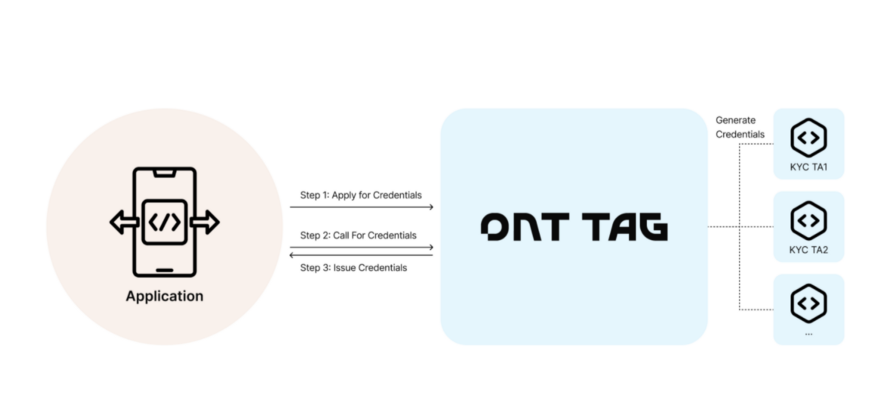
ONT TAG enables ROCKI (along with other apps) to quickly obtain a user’s verifiable credentials with the user’s authorization. The authorization process is performed whilst protecting user privacy. To authorize credentials, ONT TAG must first be granted permission by the user only.
This set of solutions fully takes into account the verification requirements of users and applications for specific information sources.
Being fully integrated into the ROCKI application, when users log into ROCKI, ONT TAG is working in the background to verify their credentials. This means that users unfamiliar with Ontology may not even know that ROCKI is actually relying on Ontology’s DID framework. Nonetheless, the user benefits from ONT TAG’s unique authorization process. The entire process only takes a few minutes, is cheap, and prevents the application from collecting user data.
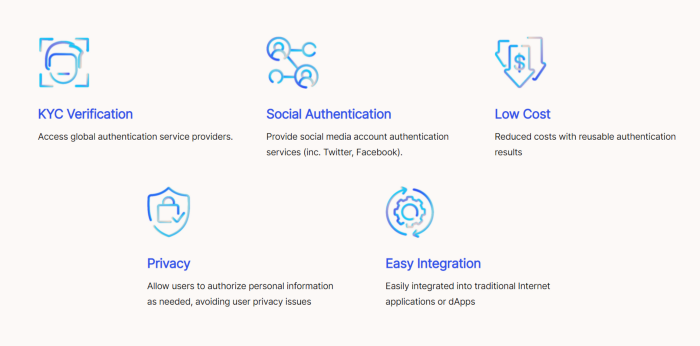
ROCKI is a fast-growing start-up with a growing user base of over 9,000 musicians and 30,000 songs. Thus far, over 1,200 music NFTs have been minted and traded on the platform. We are excited to be providing DID services to ROCKI’s users. ONT TAG ensures ROCKI users’ data remains secure and artists are rewarded for the work they produce.
Stay tuned for future Ontology news and updates.
About ROCKI
ROCKI is a user-centric music streaming ecosystem that incentives both the artists and the listeners by rewarding them with its in-house ROCKI token. Specifically, ROCKI’s marketplace provides artists with near-real-time royalty payments, paid in ROCKI — thereby solving one of the major challenges in the modern, COVID-stricken digital music industry, where most artists have to fight for streaming pay. ROCKI recently received attention from some large crypto media and finance outlets, when dance producer Guy J sold the very first NFT representing 50% of his new track’s future royalties for 40 ETH.
]]>Highlights
The Ontology global community is constantly growing, with membership now close to 110,000. More and more Ontology contributors are working together for the long-term, healthy development of Ontology projects. This week, another Ontology member from the English community became an Ontology Harbinger. We currently have 14 enthusiastic Ontology Harbingers, who come from all over the world and work in different fields. They are active in different language communities of Ontology, including English, Filipino, Hindi, etc. They share their ideas, organize various community activities, and are committed to building a better Ontology ecosystem.
Latest Developments
Development Progress
- We have completed the launch of Ontology’s EVM TestNet and are 93% finished with testing. At the same time, a large number of community developers are actively participating in the “Security Vulnerabilities and Threat Intelligence Bounty Program”, launched by Ontology and SlowMist.
- We have finalized Ethereum RPC support and have fully completed internal testing. The TestNet has been synchronized online; we are 93% done with testing.
- We have completed 100% of Ontology’s Ethereum account system development and the TestNet has been synchronized online; we are 94% done with testing.
- The EVM/OEP-4 asset seamless transfer technical solution, which facilitates the efficient conversion between OEP-4 assets and EVM assets, is complete and the TestNet has been synchronized online; we are 95% done with testing.
- We are 100% done with the survey on the improvement of the decimals of ONT and ONG and we are in the process of internal testing.
- The ontology-go-sdk and ontology-java-sdk support ONT and ONG decimals updates.
- We are 10% done with the survey on the RISCV’s simplified instruction set architecture.
Product Development
- ONTO App v4.1.1 was released, adding support for the Harmony Chain, wallet switching function for dApps supporting multiple chains, and support for configuration of token unit.
- ONTO hosted a campaign with BabySwap, the first 100 participants, and top 20 participants who stake the most will receive the highest tier of rewards. Voting for ONTO in BabySwap also has a chance to get extra rewards. The event is in progress, and will end at 07:59 (Singapore time) on November 27th.
- ONTO hosted a campaign with MCDEX, the first 300 participants will receive rich rewards. The event is in progress, and will end at 17:00 (Singapore time) on November 26th.
- ONTO hosted a campaign with OCP Finance, the first 150 participants, and top 20 participants who stake the most will receive the highest tier of rewards. Participants who meet certain conditions will have the chance to enter a lottery. The event is in progress, and will end at 17:00 (Singapore time) on November 24th.
On-Chain Activity
- 121 total dApps on MainNet as of November 22th, 2021.
- 6,823,269 total dApp-related transactions on MainNet, an increase of 6,162 from last week.
- 16,733,530 total transactions on MainNet, an increase of 26,331 from last week.
Community Growth
- 1,295 new members joined our global community this week, and Geoff Richards from the English community officially became a Ontology Harbinger. This excellent community member will bring more new energy to our community, and also welcome more new members to join us.
- Ontology published the next couple of interviews in its Harbinger Series. Geoff Richards from our English community said that compared with other blockchain communities, members of the Ontology community are more willing to help people by sharing their own experiences. The community also attaches great importance to the voice of each member, and can listen to their problems, suggestions and various solutions in time.
- We held our weekly Discord Community Call, led by Humpty Calderon, our Head of Community. He focused on how decentralized identity empowers the metaverse; The metaverse requires the unity and integrity of our identities. Ontology’s decentralized identity solution can be seamlessly integrated into metaverse games to generate a unified identity based on the user’s behavior, which is convenient for users to use in various games.
- We held our Telegram weekly Community Call, led by Benny, an Ontology Harbinger from our Asian community. He discussed with community members about Ontology’s Staking strategy and upcoming 4th anniversary NFT event; Community members expressed their great anticipation for this extraordinary commemorative event.
- As always, we’re active on Twitter and Telegram where you can keep up with our latest developments and community updates.
Ontology in the Media
Forbes — Crypto Is The Key To The Metaverse
The promise of the metaverse is that it will provide users an augmented reality experience that — in many ways — might exceed physical reality in terms of the experiences and opportunities therein. What is oftentimes missing from the discussions around the potential of the metaverse is how all of this information will be secured and protected. Specifically, if an individual or group of individuals are going to be engaging with other people in a virtual environment there needs to be some form of assurance that these transactions are secure.
Hacks and data breaches occur on a frequent basis, but if people are going to be expected to engage in a wholly online and virtual environment, the underlying platform on which they are going to be using needs to be secure.
After long-term practice, the Ontology Decentralized Identity (DID) solution has been proven to be able to achieve strong privacy protection, and can seamlessly integrate various applications and platforms. This means that applications in the field of Metaverse can make up for their own deficiencies in privacy protection by integrating Ontology DID solutions, and attract more users to join them.
]]>
Ontology, the project bringing trust, privacy, and security to Web3 through decentralized identity and data solutions, has announced a partnership with bloXmove, a business-to-business mobility blockchain platform designed to simplify travel across multiple forms of transportation by connecting mobility apps and reducing the need for users to switch between them.
The rapid increase in the digitization of transport and emergence of digital mobility apps enabling individuals to avail of cars, scooters, bikes, flight and train tickets, and more has resulted in a fragmented infrastructure that requires users to sign-up to various applications over and over again. This has led to a proliferation of data exchange, as users are increasingly required to hand over sensitive data.
Addressing these problems, this partnership will see bloXmove integrate Ontology’s decentralized digital identity protocol (DID) into its platform, providing users with a decentralized identifier that will allow them to share their verifiable credentials, such as driving licenses, in a way that is totally private, secure and encrypted. It will also allow them to store a host of identifiers securely in one place, enabling reuse of the same identifier for multiple modes of transport, whilst remaining assured that their private information is safe.
Li Jun, Founder of Ontology said: “The fragmentation of the urban transport industry means there is a great need to fortify user security and data through decentralized technologies. bloXmove is doing amazing work to streamline the user journey and now, by integrating Ontology’s DID and data solutions, the whole ecosystem will be made easier to navigate, more private, and more secure. Following on from our previous partnership with bloXmove incubator and Mercedes parent Daimler Mobility to develop Welcome Home, we are proud to be continuing to bring tangible use cases for blockchain and decentralized identity to the transport industry. We look forward to supporting bloXmove in creating the biggest global mobility alliance connecting bikes, scooters, car-sharing, trains and more.”
With bloXmove, settlements can be automated and secured via BLXM, the bloXmove token. Ontology will support token generation for bloXmove, whose access token smart contracts will be deployed on the Ontology chain. In addition, by leveraging Ontology’s blockchain technology, bloXmove will also achieve interoperability with other public blockchains while improving efficiency and lowering costs.
Dr. Harry Behrens, CTO and Co-Founder of bloXmove, said, “We are honored to partner with Ontology to combine bloXmove Mobility Blockchain Platform with their state-of-the-art DID Technology. Decentralized Identifiers (DID) are the crucial addition to Blockchain to create real-world business applications. This collaboration will bring us to the next level of mobility service roaming and decentralization. Easy access to mobility should not mean a compromise on privacy and data security for our users, which is why we have partnered with Ontology to strengthen our offering and provide our users with new, even more secure ways to share their information when using mobility apps.”
]]>Highlights
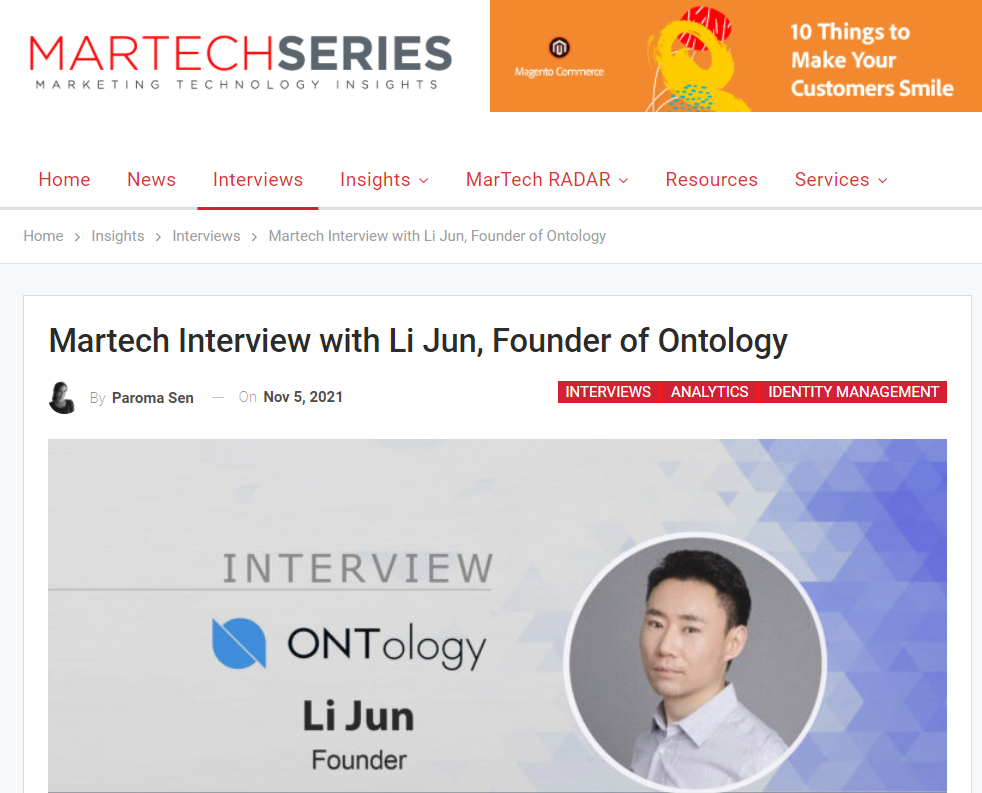
Recently, Ontology founder Li Jun was interviewed by MarTech Series. He shared his views on the future development of Web3 and discussed the development of Ontology ecosystem. Since its establishment, Ontology’s decentralized identity protocol has been adopted by many companies around the world. In the future, we expect more and more users to adopt decentralized identity solutions to manage their digital identities Ontology plans to introduce more innovative products in this regard to meet the needs of more users.
Latest Developments
Development Progress
- We have completed the launch of Ontology’s EVM TestNet and are 90% done with testing. At the same time, a large number of community developers are actively participating in the “Security Vulnerabilities and Threat Intelligence Bounty Program”, launched by Ontology and SlowMist.
- We have completed Ethereum RPC support and are 100% done with internal testing. The TestNet has been synchronized online; we are 90% done with testing.
- We have completed 100% of Ontology’s Ethereum account system development and the TestNet has been synchronized online; we are 91% done with testing.
- The EVM/OEP-4 asset seamless transfer technical solution, which facilitates the efficient conversion between OEP-4 assets and EVM assets, is complete and the TestNet has been synchronized online; we are 92% done with testing.
- We are 100% done with the survey on the improvement of the decimals of ONT and ONG and we are in the process of internal testing.
- The ontology-go-sdk and ontology-java-sdk support ONT and ONG decimals updates.
- We are 10% done with the survey on the RISCV’s simplified instruction set architecture.
Product Development
- ONTO hosted a campaign with cBridge. The first 250 participants and top 50 participants who stake the most will receive the highest tier of rewards. Participants who meet certain conditions will have the chance to enter a lottery to win ONG. The event is in progress, and will end at 11:00 (Singapore time) on November 18th.

- ONTO hosted a campaign with ACryptoS (BSC). The first 75 participants and top 20 participants who stake the most will receive the highest tier of rewards. The first 100 new ONTO users participating in the event will receive additional rewards. The activity is in progress and will end at 17:00 (Singapore time) on November 16th.
- ONTO hosted a NFT lottery campaign with Samurai. Participants who meet certain conditions will have the chance to win NFTs. The event is in progress with over 1,000 participants, and will end at 21:00 (Singapore time) on November 16th.
- ONTO hosted a campaign with Plato Farm. Participants who complete a series of tasks such as downloading the ONTO App will receive rewards. The number of submitted forms currently exceeds 260,000, and this campaign will end at 21:00 (Singapore time) on November 17th.
On-Chain Activity
- 121 total dApps on MainNet as of November 15th, 2021.
- 6,817,107 total dApp-related transactions on MainNet, an increase of 4,275 from last week.
- 16,707,199 total transactions on MainNet, an increase of 32,714 from last week.
Community Growth
- 1,843 new members joined our global community this week. The active community has attracted a large number of new members to join us.
- Ontology published the next couple of interviews in its Harbinger Series. Andrey Sher from our Russian community said that Ontology has made progress in the Web3 field and created a unique decentralized identity solution. He hopes to help more community members learn about privacy protection through Ontology.
- We held our weekly Discord Community Call, led by Humpty Calderon, our Head of Community. He focused on “Let NFT return to the public.”; with the emergence of more and more DeFi+NFT projects, Ontology’s DID solution and OScore provide them with a solution for identity verification. Through on-chain and off-chain data, users will have accurate identity and reputation information to trade NFTs with each other.
- We held our DeID Summit: Humpty Calderon, our Head of Community, invited Charles Wayn, co-founder of Project Galaxy, to discuss “NFTs as a service infrastructure”. Charles said: Project Galaxy is providing services related to on-chain certificates (NFTs) for communities and enterprises. These certificates (NFTs) contain a lot of user data and provide users with credibility in the network.
- We held our Telegram weekly Community Call, led by Astro, an Ontology Harbinger from our Asian community. He discussed with community members about Ontology’s upcoming 4th anniversary NFT event; community members provided many novel ideas for this program.
- As always, we’re active on Twitter and Telegram where you can keep up with our latest developments and community updates.
Ontology in the Media
VentureBeat — Decentralization may be key to protecting our digital identities
Researchers around the world are working to create alternatives to our existing digital identities through the decentralized web, or Web 3.0. These alternatives use new protocols that remove the need for intermediaries during transactions, while further democratizing the web and bringing value back to creators and participants. The goal is to enable internet users to verify their credentials without the dependence of intermediaries while managing their own identities. This will create a fair, secure, fast, and scalable new internet with a stronger focus on security and privacy.
With Ontology’s ONT ID and OScore technologies, users can manage decentralized digital identities and reputation scores. ONT ID is Ontology’s decentralized identity framework that enables users to control their data and decide whether a third-party can access a particular piece of information about them. It protects user privacy and ensures data security, enabling trusted collaboration. Ontology uses technical means to provide trust guarantees between unfamiliar users, combines a decentralized credit system with traditional finance, has created a credit-based cross-chain decentralized asset management platform (Wing Finance), and realizes Web 3.0 peer-to-peer transactions and disintermediation.
]]>Highlights
Recently, Ontology announced that it has further deepened its cooperation with ROCKI, a next-generation music streaming service and music NFT platform built on Binance Smart Chain. Ontology provides ROCKI with a decentralized identity-based batch verification solution. ONT TAG ensures ROCKI users’ data remains secure and artists are rewarded for the work they produce.
Latest Developments
Development Progress
- We have completed the launch of Ontology’s EVM TestNet and are 86% done with testing. At the same time, a large number of community developers are actively participating in the “Security Vulnerabilities and Threat Intelligence Bounty Program”, launched by Ontology and SlowMist.
- We have completed Ethereum RPC support and are 100% done with internal testing. The TestNet has been synchronized online; we are 87% done with testing.
- We have completed 100% of Ontology’s Ethereum account system development and the TestNet has been synchronized online; we are 86% done with testing.
- The EVM/OEP-4 asset seamless transfer technical solution, which facilitates the efficient conversion between OEP-4 assets and EVM assets, is complete and the TestNet has been synchronized online; we are 86% done with testing.
- We are 100% done with the survey on the improvement of the accuracy of ONT and ONG and we are in the process of internal testing.
Product Development
- ONTO App v4.1.0 was released, adding a list display of NFTs on multiple chains and supporting NFTs on Ethereum, Ontology, BSC and Polygon.
- ONTO hosted a campaign with Landshare. The first 200 participants and top 10 participants who stake the most will receive the most rewards, and the top 100 new ONTO users who participated in the event will also receive additional rewards. The event is in progress, and will end at 17:00 (Singapore time) on November 12th.
- ONTO hosted a campaign with CafeSwap (Polygon). Participants who meet certain conditions will have the chance to enter a lottery to win ONG rewards. The activity is in progress and will end at 17:00 (Singapore time) on November 11th.
- ONTO hosted a campaign with Wing and ApeSwap. The first 100 participants will each win rewards and all eligible users can participate in a lottery. The event is in progress, and will end at 2:00 (Singapore time) on November 11th.
- ONTO hosted a campaign with ButterSwap. The top 200 participants and the 3 participants with the highest participation received rewards. The first 200 new ONTO users participating in the event also received additional rewards. The event has successfully concluded, with more than 600 participants.
- ONTO hosted a campaign with O3 Swap. The first 300 users who use ONTO to participate received rewards. All participants who met the conditions had the opportunity to participate in the lottery. The event successfully concluded, with about 1,000 participants.
On-Chain Activity
- 121 total dApps on MainNet as of November 8th, 2021.
- 6,812,832 total dApp-related transactions on MainNet, an increase of 22,280 from last week.
- 16,674,485 total transactions on MainNet, an increase of 104,115 from last week.
Community Growth
- 2,722 new members joined our global community this week. The newly launched community activities have attracted a large number of new members to join us.
- Ontology published the next couple of interviews in its Harbinger Series. John Francisco from our Spanish community stated that his responsibility is to provide support to Ontology’s global community partners, Munaj Hossan from our Bengali community hopes to help Ontology carry out diversified activities to develop the community.
- Ontology Harbinger Emilio from our Spanish community, was invited to participate in an online interview organized by YouTube KOL, BCryptoDinero. He discussed how Ontology focuses on providing decentralized identity and data solutions for Web3, and shared Ontology’s vision, plan and future outlook.
- We held our weekly Discord Community Call, led by Humpty Calderon, our Head of Community. He introduced how to contribute to Ontology’s ecosystem; Ontology attaches great importance to actual contributors in the ecology, so we are preparing monthly Q&As, which will explore the current status of Ontology, share node operation experiences, and some new ideas.
- We held our Telegram Staking Q&A, led by Humpty Calderon. He elaborated on the economic model of Ontology and answered staking-related questions so that interested members can participate more quickly.
- We held our Telegram weekly Community Call, led by Astro, an Ontology Harbinger from our Asian community. He discussed with community members about Ontology’s upcoming 4th anniversary NFT event, with community members sharing their own suggestions.
- As always, we’re active on Twitter and Telegram where you can keep up with our latest developments and community updates.
Global News
- Ontology, Nervos and QuarkChain jointly organized the “EVM Autumn Concerto’’ blockchain technology seminar. Ontology Technical Director, Ning Hu, shared Ontology’s research on VM technology and the possibility of future development in the field of VM. Blockchain technology experts discussed the development and future of EVM together.
- Ontology Technical Director, Ning Hu, was invited to participate in the second hardcore technology sharing BeWater Live held by Bewater Community, top developer community of China, sharing content on the theme “From 2D Social Network to 3D Social Network” for technology enthusiasts.
- Ontology’s Chief of Global Ecosystem Partnerships, Gloria Wu, shared her opinion in the article “Women and Web 3.0 — Experts Weigh-In On Community and Financial Freedom”, published in BeInCrypto. She said decentralized finance offers more opportunities for authentic creativity and boundary-breaking, and women’s role in the redefinition of what finance is, is key.
Ontology in the Media
CoinDesk — Why US Policymakers Should Embrace Web 3
Big tech has been embroiled in an unending series of controversies over the past decade, ranging from poor stewardship of consumer data and privacy breaches to disinformation and algorithmic bias. But these platforms are now being disrupted and disintermediated by Web3. For instance, decentralization has opened up the possibility of a world in which people can own their data and grant applications permission to use it on a limited basis, rather than having that data littered across hundreds of centralized databases.
When people talk about Web3, it is often difficult to circumvent a puzzle: how to protect their own identity and privacy data while also being connected with the real world? In order to solve this confusion and to prepare people for the Web3 explosion, Ontology proposed the decentralized digital identity (DID) solution, ONT ID. ONT ID is a decentralized identity framework based on the W3C commendations for decentralized identifiers and verifiable credentials, using blockchain and cryptographic technology, that can quickly identify and connect people, data, and services. It is decentralized, self-sovereign, privacy-preserving, and easy to use, enabling users to fully control their own data and identities.
]]>