This is where CeDeFi, the convergence of centralized and decentralized finance, is playing a growing role, particularly within non-custodial wallets.
Rather than replacing DeFi, CeDeFi is emerging as a complementary layer that helps bridge usability gaps without compromising user sovereignty.
Why CeDeFi Matters
Pure DeFi offers transparency and self-custody, but it can also introduce friction. Fragmented liquidity, complex interfaces, and variable execution outcomes can create barriers, especially for users navigating multiple chains or assets.
Centralized exchanges, on the other hand, offer deep liquidity and simplified execution, but often require users to relinquish custody and manage additional accounts.
CeDeFi combines elements of both models. It allows users to access centralized liquidity and pricing efficiency directly from a non-custodial environment, without transferring control of their assets to an exchange account.
For users, this means fewer steps and reduced operational risk.
For ecosystems, it means broader participation without lowering trust standards.
Non-Custodial Wallets as the Integration Layer
Non-custodial wallets are increasingly becoming the natural home for CeDeFi integrations.
From an architectural perspective, wallets already sit at the intersection of identity, assets, and transaction execution. Adding CeDeFi services within this context allows users to interact with centralized liquidity providers while maintaining self-custody and on-chain transparency.
In wallets such as ONTO Wallet, CeDeFi integrations enable users to:
- Swap or bridge assets across chains without depositing funds into an exchange account
- Retain full control of private keys throughout the transaction flow
- Access multiple liquidity providers through a single interface
The wallet becomes an orchestration layer, rather than a gatekeeper.
Partner Integrations in Practice
ONTO Wallet integrates with established CeDeFi partners to expand exchange options while preserving non-custodial principles.
Services such as Changelly, SimpleSwap, and Exolix provide access to aggregated liquidity and cross-chain execution, allowing users to complete swaps or bridges directly from within the wallet interface.
From an ecosystem perspective, these integrations:
- Reduce friction for users entering or moving within Web3
- Improve price discovery and execution reliability
- Allow wallets to offer flexibility without rebuilding exchange infrastructure
Importantly, these services operate as optional pathways, not mandatory dependencies. Users remain free to choose how and when they engage.
Trust, Control, and Optionality
CeDeFi is sometimes misunderstood as a compromise between decentralization and convenience. In practice, its value depends on how it is implemented.
When integrated into a non-custodial wallet:
- Custody remains with the user
- Execution is transparent
- Identity and compliance requirements can be applied selectively
- Risk is reduced through choice rather than restriction
This model aligns closely with Ontology’s broader approach to Web3 infrastructure, where trust is applied deliberately and proportionally, rather than universally enforced.
Looking Ahead
As Web3 adoption expands, users will continue to demand both autonomy and efficiency. CeDeFi, when embedded thoughtfully within non-custodial wallets, offers a practical path forward.
Rather than forcing users to choose between control and convenience, this approach allows both to coexist.
Ontology will continue supporting infrastructure and identity standards that make these integrations possible, while products like ONTO Wallet demonstrate how they can be delivered in practice.
]]> Voting Period:
Start: 00:00 UTC, January 6
End: 00:00 UTC, January 9
The goal? Lower the cost of onchain transactions, improve usability for dApps, and unlock a smoother experience for developers and users across the ecosystem. With recent optimizations improving both consensus and gas handling, the network is ready for this change, without sacrificing performance or stability.
Lower gas = lower barriers. This proposal helps Ontology stay competitive with other L1s while empowering builders, users, and emerging dApps with a more cost-efficient environment.
 Node operators can vote now via OWallet. Every vote counts in shaping the next evolution of the Ontology network.
Why We Built Ontello
Ontello started from a simple belief:
Your conversations, your identity, and your digital actions should belong to you, not to a platform.
In the Ontello Beta, you will see the beginnings of that idea come together:
- A secure, end-to-end encrypted messenger
- A self-sovereign identity powered by ONT ID
- A built-in smart wallet that works with your device’s passkey
- A growing library of AI agents designed for Web3 life
What You Can Do in the Ontello Beta
Below is a practical overview of what works today and how you can try it.
Create Your Ontello Account (With Your ONT ID)
Your Ontello account begins with ONT ID, your decentralized identity.
It acts as your display name and your passport across the Ontello ecosystem.
You can customise your display name later, but your ONT ID is permanent.
Private, Encrypted Chat, Backed by On-Chain Identity
Ontello uses the Matrix protocol to deliver end-to-end encrypted messaging.
Because you sign in with ONT ID, every message is tied to a real, verifiable, self-owned identity.
To start a chat:
- Click + Create Chat
- Search for a contact by ONT ID or Matrix ID
- Begin your conversation, everything is encrypted by default
Your Smart Wallet, Automatically Created and Passkey-Secured
Ontello generates a self-custodial smart wallet automatically when you register.
No seed phrases.
No private key management.
No complexity.
Your wallet is secured by your device’s Passkey, the same authentication you use to unlock your phone. It is safer, easier, and avoids the common pitfalls of manual key storage.
In this beta release, the wallet supports: Ontology EVM (ONT, ONG)
You can send assets to ONT ID, ENS, or standard addresses.
Explore the AI Agent Store
One of Ontello’s early standout features is the AI Agent Store, a curated collection of agents built specifically for Web3 users.
In beta, you can:
- Browse available agents
- Chat with them directly
- Ask questions or perform simple on-chain actions (where supported)
Our Philosophy: Privacy, Identity, and Intelligence Should Belong to You
Ontello is built around a simple vision.
- Identity should be decentralized.
- Communication should be encrypted and interoperable.
- AI should empower individuals, not platforms.
This beta release is a first community step toward that vision.
]]>
The transition to decentralized identity goes beyond enhancing online safety; it’s about improving and simplifying a variety of digital interactions. Imagine being able to swiftly and securely verify your identity, be it at a bank, medical facility, or even during elections. This shift promises to revolutionize sectors like finance, healthcare, and governance, streamlining processes and safeguarding private information. However, the path to widespread adoption of these decentralized technologies involves overcoming significant challenges including interoperability, user education, and aligning with regulatory frameworks.
Key Points to Remember:
- Enhanced Control and Cybersecurity: Decentralized identity systems significantly bolster the safety and ease of managing your personal information online.
- Versatility in Application: These systems, rooted in blockchain technology, offer versatile applications, simplifying identity verification across various sectors.
- Navigating Challenges for Widespread Use: Addressing challenges like scalability, user adoption, and regulatory compliance is crucial for the broader integration of decentralized identity.
- A Paradigm Shift in Identity Management: Moving from centralized to distributed models, decentralized identity, powered by blockchain, enhances both security and trustworthiness.
Explaining the Idea:
Decentralized identity, or self-sovereign identity, is akin to having a unique key that proves who you are, under your exclusive control. It’s about creating and maintaining your own digital identifiers, a stark contrast to traditional identity systems. This approach significantly boosts privacy and cybersecurity, offering you the autonomy to make your own choices.
How Blockchain Helps:
Blockchain acts as a robust and secure digital ledger, underpinning decentralized identity. It’s like a consensus-driven digital notebook, ensuring the integrity and authenticity of your identity. This technology provides a transparent and tamper-proof record, fostering trust and reliability in digital interactions.
Advantages and Uses:
- Decentralized identity systems offer enhanced privacy and security over traditional models. Their real-world use cases span various sectors:
- Healthcare: Patients control their health records, ensuring data privacy.
- Finance: Secure and streamlined online banking experiences.
- E-commerce and Insurance: Enhanced user trust through personal data ownership.
- Travel: Secure sharing of identity documents, reducing data exposure risks.
- Governance: Anonymous and safe interactions with government services.
Addressing Implementation Challenges:
For decentralized identity systems to function optimally, it’s essential to address scalability, encourage user adoption, and ensure regulatory compliance. These solutions enhance system performance, foster user trust, and meet legal standards.
Facilitating Growth and User Adoption:
To scale decentralized identities (DIDs), efficient network management is key. It’s about enhancing node efficiency, distributing workload, and employing off-chain solutions. Encouraging user adoption involves clear education, showcasing the benefits of security and privacy, and forming partnerships with trusted entities.
Navigating Regulatory Landscapes:
Decentralized identity solutions require careful consideration of regulatory landscapes. They must align with governmental governance frameworks for legitimacy. Achieving regulatory compliance involves monitoring evolving regulations, engaging with policymakers, and ensuring DIDs adaptability.
Ensuring Interoperability:
Developing standards for DIDs to work across platforms and jurisdictions is crucial for global efficacy. Establishing protocols for network nodes to interact with varying regulatory environments strengthens the viability of decentralized identity on a global scale.
Conclusion:
Decentralized identity systems represent a significant advancement in our digital world, offering a path to enhanced privacy and more secure online interactions. The adoption of these systems, integrated with blockchain technology, indicates a promising future, potentially transforming the landscape of online identity verification. The growth of this ecosystem hinges on widespread adoption and collaborative efforts among stakeholders, aiming to establish a norm where secure, private, and convenient identity management is the standard. While challenges in scalability, legal frameworks, and public understanding persist, the ongoing technological evolution and the growing emphasis on privacy suggest a bright future for decentralized identity systems.
]]>A Look Back at Year Six
Reflecting on the past year, we’ve achieved remarkable milestones:
- Global Expansion: Listing on regulated exchanges, including ONT for Binance Japan and ONG for Binance US.
- Enhancing Utility: Empowering ONT & ONG with daily life applications, such as through Alchemy Pay.
- Incubating Innovation: The incubation of Goshen Network and supporting iziswap on Ontology EVM.
- Strengthening Developer Support: Collaborating with dev-oriented projects like Getblock, Bwarelabs, Nownodes, and sponsoring DIF Hackathon.
- Global Presence: Participation in international events like KBW, Token2049, Paris Blockchain Week, and more.
- Liquid Staking Launch: The beta launch of stONT, a significant step in our journey to revolutionize decentralized finance (DeFi) and provide our users with more flexible and efficient staking options.
Ontology 6th Anniversary Celebration Campaign
To commemorate our 6th anniversary, we’re delighted to announce a unique celebration campaign. Using Orange Protocol, we’ll measure your engagement and loyalty from various aspects, offering 6000 ONG in rewards through our exclusive Loyal NFT collection to our dedicated supporters. If the ONT staking rate hits 25%, we’re doubling the rewards! It’s our way of showing gratitude for your trust and involvement in Ontology’s growth.
The Rewards System Explained
Our anniversary campaign celebrates your commitment. It’s not just about the retweet of a campaign tweet; it’s about recognizing those who have been part of our community for years. The duration of your involvement, reflected in the age of your Twitter account and how long you have been a member of Ontology’s Discord channel, is a testament to your dedication. Joining the celebration is easy. Simply participate through Orange Protocol and connect your Ontology wallet.
How to Earn Points and Win NFTs
Join us in our special celebration and stand a chance to win unique NFTs! The more points you accumulate, the rarer the NFT you can win. Points can be earned through:
- Twitter Account Age
- Length of Discord Membership
- ONT and stONT Staking
- Being a Node Operator
- Loyal NFT Holdings
Rewards
- Super Rare NFT, Rare NFT, Loyal NFT Plus: The rarer your NFT, the higher its value, with a total value of up to 12,000 ONG.
- Reward Distribution: The final distribution will be based on your total points.
Participation Rules
- Join via Orange Protocol: https://app.orangeprotocol.io/campaigns/details/21
- Connect Your Ontology Wallet: Your wallet should start with ‘A’ for verification and point calculation.
- Native stONT: stONT should be native to your connected wallet. Transferred stONT won’t be counted.
- Node Operators: Connect your node operation wallet for verification.
- Single Wallet Tracking: We’ll track only your connected wallet for points.
- Snapshot Date: Points are based on a snapshot taken on December 5th.
Get ready to be part of this exciting journey. Your dedication and loyalty to Ontology could earn you some truly remarkable rewards! 


Looking Ahead: The Future of Ontology Network
As Ontology Network strides into the future, the spotlight shines brightly on our ONT ID offering — the cornerstone of our endeavor in decentralized identity solutions. The strength of ONT ID lies not just in its technological prowess but in its growing adoption and the expanding ecosystem of partners who recognize its transformative potential.
ONT ID: Empowering Decentralized Identity
- Central to Innovation: ONT ID stands at the heart of our mission, providing a secure and user-centric identity management solution. Its role is becoming increasingly crucial as the digital world navigates the complexities of privacy, security, and trust.
- Expanding Reach: Our ongoing efforts to broaden ONT ID integrations are bearing fruit. We’re actively collaborating with a diverse range of partners, bringing decentralized identity to a wider audience and a variety of use cases.
- User Empowerment: ONT ID is more than a technology; it’s a tool for empowerment, enabling users to take control of their digital identities and data in a way that was previously unimaginable.
Building a Collaborative Future
Recent Achievements: The recent DIF hackathon stands as a testament to our commitment to fostering innovation. By bringing together bright minds and creative solutions, we’re not just hosting events; we’re building a community of innovators.
Expect More Collaborations: Looking ahead, expect to see more of these collaborative efforts. We’re not just planning events; we’re setting the stage for breakthroughs in decentralized solutions.
stONT: A Complementary Force
Shaping Infrastructure: While the focus intensifies on ONT ID, our development of stONT as a new infrastructural element continues. The stONT Beta launch is just the start of integrating staking solutions more deeply into our ecosystem.
Harmonizing Innovations: stONT and ONT ID together symbolize our dual commitment to decentralized finance and identity solutions — two pillars that are reshaping the landscape of the digital world.
Our six-year journey has been incredible, thanks to the enthusiasm and support of our community. As we step into another year, we’re excited to continue this adventure with you, pushing the boundaries of Web3 and decentralized identity further.
Join our 6th Anniversary Celebration Campaign! Engage with our community on Twitter, Discord, and through your contributions to the network. Let’s make this celebration a monumental one!
We’re eager to hear from you. How has Ontology impacted your journey in the world of blockchain and decentralized identity? Share your stories and thoughts in the comments below.
]]>Our Verifiable Credentials Software Development Kits (VC SDKs) for Go and Java developers, which have been open-sourced to encourage community collaboration, are a key part of this commitment. The ongoing integration of these SDKs has brought about substantial enhancements to ONT ID, including significant improvements to Mercury—our secure, trustless, DID-based peer-to-peer communication protocol—as well as to ONT Login, our universal authenticator, and ONT TAG, our Trust Anchor Gateway.
These enhancements have made our decentralized identity solutions more compatible and easier to use, thereby expanding Ontology’s ecosystem collaboration and accelerating the adoption of DID solutions on a large scale.
Enhancements in Mercury
Mercury serves as a trustless, peer-to-peer decentralized communication protocol that enables entities to securely exchange messages, verifiable credentials, and presentations. This protocol is vital for facilitating easier integrations of decentralized identity solutions by both Web3 and Web2 application developers.
The protocol delineates various DID-based sub-protocols to establish connections and transmit messages, credentials, and presentations between entities. These include:
Connection Protocol: Establishes secure links between different entities.
General Message Exchange Protocol: Allows for the encrypted and secure exchange of messages.
Verifiable Credential and Presentation Transmission Protocol: Facilitates the issuance, presentation, and verification of credentials securely.
Within Mercury, communication is managed through three types of agents:
User Agent: Operates under the control of the end user, storing secret keys and verifiable credentials locally for secure communication.
Cloud Agent: Facilitates message routing and storage when continuous connectivity isn’t feasible.
Service Agent: Issues verifiable credentials and manages public DID profiles, enhancing the security of digital interactions.
Ongoing Upgrades to ONT Login and ONT TAG
ONT Login and ONT TAG continue to evolve, offering robust features that enhance the decentralized authentication landscape:
ONT Login enhances user experience with a seamless, secure login process, making it easier for developers to implement and manage.
ONT TAG offers an open and decentralized platform for KYC services, integrating off-chain data within trustable verifiable credentials.
Looking forward, both systems will support additional decentralized identifier methods and integrate with decentralized domain naming systems like Ethereum Name Service (ENS).
Join Ontology in Shaping the Future of Decentralized Identity
Ontology’s commitment to leading the development of industry-standard DID tools and solutions is foundational to creating a safer Web3 environment for businesses, entities, and users. As part of our effort to drive innovation, we invite developers, innovators, and enthusiasts to get involved. Please complete this form to contribute to our $10 million initiative aimed at enhancing decentralized identity solutions. Together, we can make the digital world more secure, interoperable, and user-friendly. Read more about our initiative.
]]>The integration of digital identity solutions is core to the creation of a Web3 that is secure and trusted. That’s why today, we are announcing that our bespoke Verifiable Credentials Software Development Kits (VC SDKs) are now open source and accessible to all Go and Java developers on GitHub. This includes the VC-SDKs as well as the VC-With-ONTID-SDKs, of which you can find more information below.
We are proud to invite developers to join the Ontology community and create new use cases for digital identity solutions. This news comes alongside the extension of our Dorahacks hackathon to the end of May, which aims to promote privacy and digital identity, offering a prize pool of up to $100K USD.
Applicable in both Web2 and Web3 ecosystems
Most importantly, developers do not have to be building on Ontology; the SDKs are available for use in all circumstances, and we encourage the developer community to glean the benefits of doing so.
VC-SDKs should be applied in any blockchain ecosystem, making it easy for dApp developers to implement verifiable-credential-related Web3 applications or embed verifiable credential functionalities into existing Web2 applications. Via GitHub, developers can edit content and code inline, make pull requests, file issues and send content suggestions to the documentation and SDK teams in question.
Understanding VC-Go and VC-Java SDKs
The SDKs are for verifiable credentials written in the Golang and Java languages. It conforms to the W3C recommendation for Verifiable Credentials Data Model, a specification endorsed by W3C and its members.
This SDK is identifier-agnostic. It supports a variety of identifiers, such as the decentralized identifier (DID) methods defined in the W3C DID Specification Registries, as well as identifiers from the Ethereum Name Service (ENS) or other domain naming systems. In terms of proof methods, this SDK supports common cryptographic signature algorithms and will support zero-knowledge proofs in the future. It will also support range proofs and existence proofs that will allow for selective disclosure in a sequence.
This SDK does not deal with the revocation of verifiable credentials. Because the information in a VC needs to be adjustable for security reasons, the statuses of a verifiable credential include, as a minimum, “normal” and “revoked”. This presents a use case opportunity for application developers.
VCs can be used in many business scenarios. When applying for a job, job-seekers can provide a verifiable presentation, which has necessary information and the signature generated by the job-seekers, derived from their VCs issued by a university, for example. The employer can cryptographically verify that the individual’s presentation is not fraudulent by checking both the verifiable presentation itself (such as checking the signature and the period of validity), as well as the university’s revocation services.
Understanding VC-With-ONTID-SDKs for Go and Java
Using the VC-With-ONTID-SDKS over VC-SDKs has the added advantage of allowing anyone that does not have access to their own DID protocols to apply the SDK and access the ONT ID protocols, opening up a realm of new possibilities.
This is an SDK for using ONT ID in a VC system. ONT ID is decentralized, self-sovereign, privacy-preserving, and easy to use, enabling users to fully control their own data and identities.
These SDKs should be used with the VC-SDKs which implement the main functionalities of a verifiable credential system. Besides using ONT ID to identify the various parties in a VC system, this SDK also supports rerecording the VC status in the Ontology blockchain.
With the help of these SDKs, issuers can change the verifiable credentials from “normal” to “revoked” if the issued credentials need to be revoked. It is worth noting that trying the opposite direction will not work due to security concerns. Holders can also revoke their credentials on their own.
For example, ABC is a vocational training institution that issues VCs, which can be used as vocational training certificates, to trainees. ABC records the status of these VCs on the Ontology blockchain using this SDK. Let’s say a trainee at ABC obtains a VC from ABC and its status is “normal”. However, following this, the trainee suspects their private key has been compromised. At this point, the individual can then update the status of their VC and label it as “revoked”. As a result, verifiers that received verifiable presentations derived from the compromised VCs will be notified that the verifiable presentations are invalid.
Developers can download the SDKs directly here. We are proud to be sharing our code with developers all over the world and we look forward to seeing greater integration of digital identity globally across all business cases, be it with end users or within enterprise use cases.
]]>Ontology’s move reflects its alignment with Europe’s efforts to increase data privacy and protection through legislation such as GDPR. In addition, the European Commission’s endorsement of Digital Identity as a more secure and convenient means for data storage and exchange for citizens makes Germany an ideal environment for Ontology’s expansion. By opening its new office in Europe, Ontology aims to play a role in increasing privacy across the continent and highlight the benefits that its decentralized solutions can bring to users and regulators alike.
Increasing privacy, transparency, and trust, Ontology’s high speed, low cost blockchain is designed to give users and enterprises the flexibility to build blockchain-based solutions that suit their needs, while also ensuring regulatory compliance. ONT ID, Ontology’s decentralized digital identity application, which enables users to fully control their digital identity, surpassed 1.5 million users in September 2021. Other products include the ONTO wallet, which allows users to securely manage their identities, data, and digital assets.
Europe is one of the largest hubs for blockchain related services and Web3 innovation worldwide, with much of the action happening in Berlin, which has seen over $13 billion of investment since 2016. As such, Ontology has chosen Berlin as a key strategic location where it will aim to expand its reach and capitalize on the incredible talent and resources available.
Gloria WU, Chief of Ecosystem Partnerships at Ontology, said: “Europe sits at the forefront of Web3 and technical innovation and its continued focus on increasing user privacy and security aligns clearly with our mission at Ontology. By opening our new office in Berlin, we are excited to contribute to the continent’s ongoing efforts to create a more secure web. We look forward to growing our presence in Europe and contributing to the ecosystem through a host of new partnerships, community members, and employees. We are currently hiring for a number of roles available.”
The opening of the office supplements Ontology’s long standing roots in Europe, which have been established through a host of different partnerships. Following on from its previous partnership with Mercedes parent Daimler Mobility to develop Welcome Home, an in-car system designed to transform driving experiences, Ontology recently partnered with bloXmove, a European mobility blockchain platform designed to simplify travel across multiple forms of transportation. The partnership will see bloXmove integrate Ontology’s decentralized digital identity protocol into its platform, providing users with an identifier that will allow them to share their verifiable credentials, such as driving licenses and passports just once, in a way that is totally private, secure, and encrypted.
Specifically in Berlin, Ontology has partnered with the Hochschule für Technik und Wirtschaft (HTW) University to explore joint research and teaching initiatives, with a view to developing a number of bespoke blockchain applications.
]]>As the industry has progressed and the world has increasingly embraced decentralized solutions, privacy and security issues associated with Web2 and Big Tech have been exposed. Looking to facilitate a more secure and private internet in Web3, Ontology has been working hard to build out its public chain infrastructure, decentralized identity, and data solutions to support the transition to the new web.
As well as a more private and secure internet, Web3 offers the potential for fascinating use cases as the web becomes more integrated. The metaverse, an all-encompassing digital landscape populated by virtual people, places and things, will eventually see separate virtual worlds interlink and overlap the real world. To get there, we need a public chain that puts users’ security and privacy front and center, whilst also allowing for an interoperable virtual world. Over the last four years, Ontology has been working to create an infrastructure for just that and we are delighted to now be facilitating this vision of a better internet.
As we look to the future, we are excited to onboard new partnerships and make technological advancements that contribute to our vision of Web3, as well as to the growth of our global community.
Year 1: Laying The Foundations
The launch of Ontology’s MainNet 1.0 served to position us as a high-performance public blockchain. In a significant move for the wider industry, Ontology 1.0 was the first public chain capable of executing smart contracts with identity, setting the stage for our vision for decentralized identity solutions. To lay the foundations for the open governance model which has become a key aspect of Ontology, we introduced a new consensus algorithm, VBFT, for the Ontology framework and the Triones Consensus System.
Year 2: Building Out Our Infrastructure
Year 2 saw Ontology crystallize our vision and mark out our position within the broader blockchain ecosystem. Gaining traction, we were able to supplement our MainNet by building on it with further enterprise projects that were focused on decentralized identity and data privacy. Broadening the technical applications of our chain, we launched Wasm TestNet in May, as well as the first-ever cross-chain TestNet. We didn’t stop there; in fact, it was a Multi-VM launch that year, with the launch of our Sharding Design launching in October, which provided linear stability and support for cross-shard transaction processing.
Year 3: Global Expansion
Having made our mark on the industry through technical prowess, the Ontology mission for our third year was to become a cross-chain, global network that would expand our vision of decentralized identity and data through a host of fascinating partnerships.
Throughout the year, we improved our infrastructure through the roll-out of the Ontology Layer 2.0. Additionally, ONT ID was upgraded, which served to combine users’ decentralized identity with their ONTO Wallet with one single login, while providing a framework that helps users control their identity and data. This was a huge step towards interoperability and provided an interlinked suite of products to our users.
We introduced a new governance and staking model in July, affecting both our ONT and ONG tokens, complete with a node and yield calculator allowing users to easily estimate how much they could potentially earn from staking via ONTO. Excitingly, ONG also launched on Uniswap at the end of the summer, bringing Ontology’s token to a whole new user base. As the year developed, we deployed our cross-chain decentralized identity solution on Ethereum, Near, Neo, TRON, Klaytn, Binance Smart Chain, and Polkadot. We also partnered with Patract Labs in November to accelerate smart contract ecosystem development. Finally, we joined forces with Daimler Mobility AG’s Blockchain Factory to develop MoveX, a first-of-its-kind blockchain-based mobility platform for the automotive and mobility industry.
Towards the end of the year, our focus turned to the world of decentralized finance (DeFi). In September 2020, we launched Wing.Finance, a credit-based, cross-chain DeFi lending platform. Since then Wing has seen significant growth, with increased engagement in its DAO, and has also incorporated credit-based lending through Ontology’s unique OScore credit scoring solution. The Wing Inclusive Pool, a first mover in the industry, also allows users to under-collateralize assets and lower their interest rates.
Year 4: Web3 and Interoperability
This year, Ontology has honed our existing products to match our wider vision of Web3 and position ourselves as the public chain capable of moving towards a better, decentralized, interoperable internet that places user privacy and data security at the heart of its priorities.
To facilitate this vision, our technical team began developing the Ontology Ethereum Virtual Machine (EVM) at the start of 2021. Now on TestNet, our EVM will help us establish seamless interoperability between Ontology and the Ethereum platform, offering an inclusive experience to developers and users. This development will also help to cement Ontology’s position as a cross-chain interoperable blockchain, adding to its existing virtual machines; NeoVM, Native (Ontology) VM, and WasmVM.
Reflecting a major endorsement for decentralized identity, ONT ID surpassed 1.5 million users in September. Companies across the globe have also embraced the application this year, most notably through a social good partnership announced in March with global freelancing marketplace leader, MicroWorkers, where it is being used to assist workers to receive rewards and gain greater access to capital. To facilitate its ever-expanding user base, ONT ID underwent an upgrade that will improve user experience, while also making it easier for developers to build sophisticated applications and real-world use cases through ONT ID. The Ontology products now integrated with ONT ID include:
- ONT Login, a new feature that makes trustless universal authentication for websites and applications possible, allowing users to log into multiple platforms without having to remember passwords.
- ONT TAG, Ontology’s new decentralized solution for online identity verification, which helps applications access users’ verifiable credentials, such as KYC verification, whilst also allowing users to protect their privacy by authorizing information independently.
- OScore, a DeFi credit score, used to measure creditworthiness, which is calculated using different types of on-chain transaction data.
Other partnerships have also contributed to Ontology’s arsenal. Most recently, we partnered with bloXmove, a business-to-business mobility blockchain platform designed to simplify travel across multiple forms of transportation, to bring decentralized identity to urban transport apps. In May, we partnered with ROCKI, a next-generation music streaming service and NFT platform. ROCKI will use Ontology’s decentralized identity solutions to prevent bad actors from impersonating artists and peddling inauthentic NFTs. In June, we also announced a partnership with ZAICO, a real-time cloud storage inventory management application based in Japan. We also partnered with AP.LLC, a private Japanese IT consultancy firm and hired a new Japanese advisor, Matsuyama Kitao Takayuki.
Ontology’s growth in the Japanese market has accelerated following a string of announcements, including the news that ONT would be listed on the Japanese registered crypto exchange, Decurret. This marked the first listing of ONT in Japan, a huge milestone for Ontology and our growing Japanese community. The ONT/JPY trading pair went live in July, with over 40,000 ONT trading volume taking place. In August, ONT was listed on Huobi Japan, another FSA-licensed Japanese exchange.
In January, we were delighted to announce the launch of a web-based ONTO wallet to bring additional accessibility to millions of users through their web browser. Incredibly, this was the first-ever web wallet to support cross-chain assets and dApps while also addressing the growing demand for decentralized identity and data amongst users. We also launched ONTO Anydrop, a decentralized airdrop distribution tool, that allows assets to be sent to up to 100 addresses in one transaction in a fast and secure manner across multiple mainstream blockchains. These significant achievements have led to a massive increase in users and community members of ONTO Wallet. The ONTO Wallet Twitter channel now has over 100K followers.
Wing, Ontology’s DeFi lending platform, also turned one this year. Over the past year, Wing has lived up to its title of a cross-chain platform through launching on Ethereum, OKExChain and most recently, Binance Smart Chain. It also launched a new DeFi product, “Any Pool,” which allows for the contractualization and lending of any asset.
Looking Ahead
As we have seen, the last four years have been full of incredible achievements. Undoubtedly, our community is the support system that drives this success at Ontology. As we step forward into the next era of our future, we are proud to be a well-established blockchain that has stood the test of time. Moving into Web3, we believe we are the chain that can facilitate the needs of the new web. Not only do we expect our protocols and products to continue to facilitate this shift, but we also look forward to welcoming more people to the decentralized identity and data revolution.
]]>Shared Global Community
Web 3.0 will give users increased sovereignty, especially with regards to data and identity management. Ontology believes that the Web 3.0 ecosystem is driven by a decentralized future, with individuals able to build, contribute and own their preferred products and services. Ontology’s users can already fully control their data and decide who can access the data. They can also participate in developing decentralized infrastructure community activities and governance votes that impact the direction of the project.
Over the past few years, Ontology has managed to build a global community spanning more than 30 languages in dozens of countries across several continents. In order to help further expand the Ontology community, we launched the Ontology Harbinger Program. We also launched the Harbinger Interview Series which gave some of Harbingers a chance to share their history with Ontology.
Finally, we continue to host regular Community Calls and DeID Summit events every week to discuss community governance and product development.
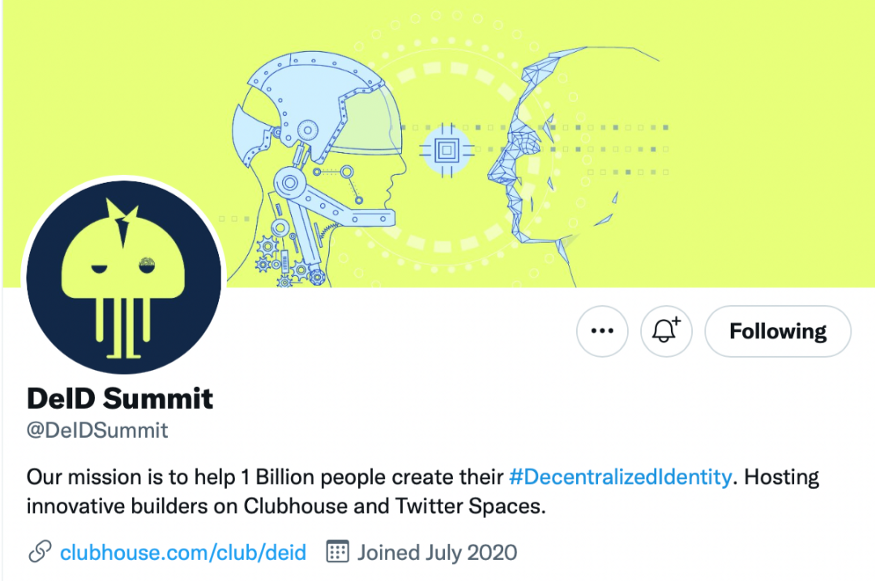
Ontology values every member of our global community. The beauty of Web 3.0 is that it is not controlled by large centralized platforms. Rather, the decentralized Web 3.0 allows every individual to contribute whilst maintaining their autonomy.
Mutual Trust Product Application
A core issue with the current Web 2.0 landscape is that it is governed primarily by a few large tech companies that continuously accumulate, store, and monetize user data. Centralized storage of private data is vulnerable to attack. There have been many reported cases of data breaches among some of the largest corporations in the world.
In “Why decentralization is essential for protecting user data and privacy”, Li Jun, Founder of Ontology, detailed how decentralized solutions help address these vulnerabilities. Ontology’s mission is to return control of data and digital identities to the user. In this way, only the user can decide who can access his or her data. This promotes privacy and autonomy, which are severely lacking in the current Web 2.0 era.
Identity
Ontology’s solution to the Web 2.0 identity problem is ONT ID and OScore. ONT ID is Ontology’s decentralized identity framework that enables users to control their data and decide whether a third-party can access a particular piece of information about them. It protects user privacy and ensures data security, enabling trusted collaboration. OScore is Ontology’s decentralized credit score. By participating in the decentralized ecosystem, OScore users can develop a decentralized reputation and reap rewards based on their activity.
Data
SAGA is Ontology’s decentralized data market. SAGA provides enterprises and individual users with a credible, standardized and cost-effective data transaction platform. In the SAGA ecosystem, users (individuals or companies) use ONT ID to verify data and associate the data stream with its owner. This ensures the data owner’s rights are protected.
Digital Assets
Ontology uses pure technical means to provide trust guarantees between unfamiliar users, combines the decentralized credit system with traditional finance, creates a credit-based cross-chain decentralized asset management platform, and realizes Web 3.0 peer-to-peer transactions and disintermediation.
In addition to being supported on the Ontology platform, the above products can also be adopted by traditional industries and centralized internet platforms. Ontology hopes to promote the transition to Web 3.0 through the widespread adoption of decentralized products.
Summary
Although there are different opinions on the definition of Web 3.0, Ontology is primarily concerned with overcoming the problems inherent to Web 2.0. By taking advantage of blockchain technology, Ontology, among other decentralized technologies, can awaken the internet’s true potential with Web 3.0.
]]>